Show the whole setup
Share wide photos, anchor close-ups, measurements, and the intended loading route.
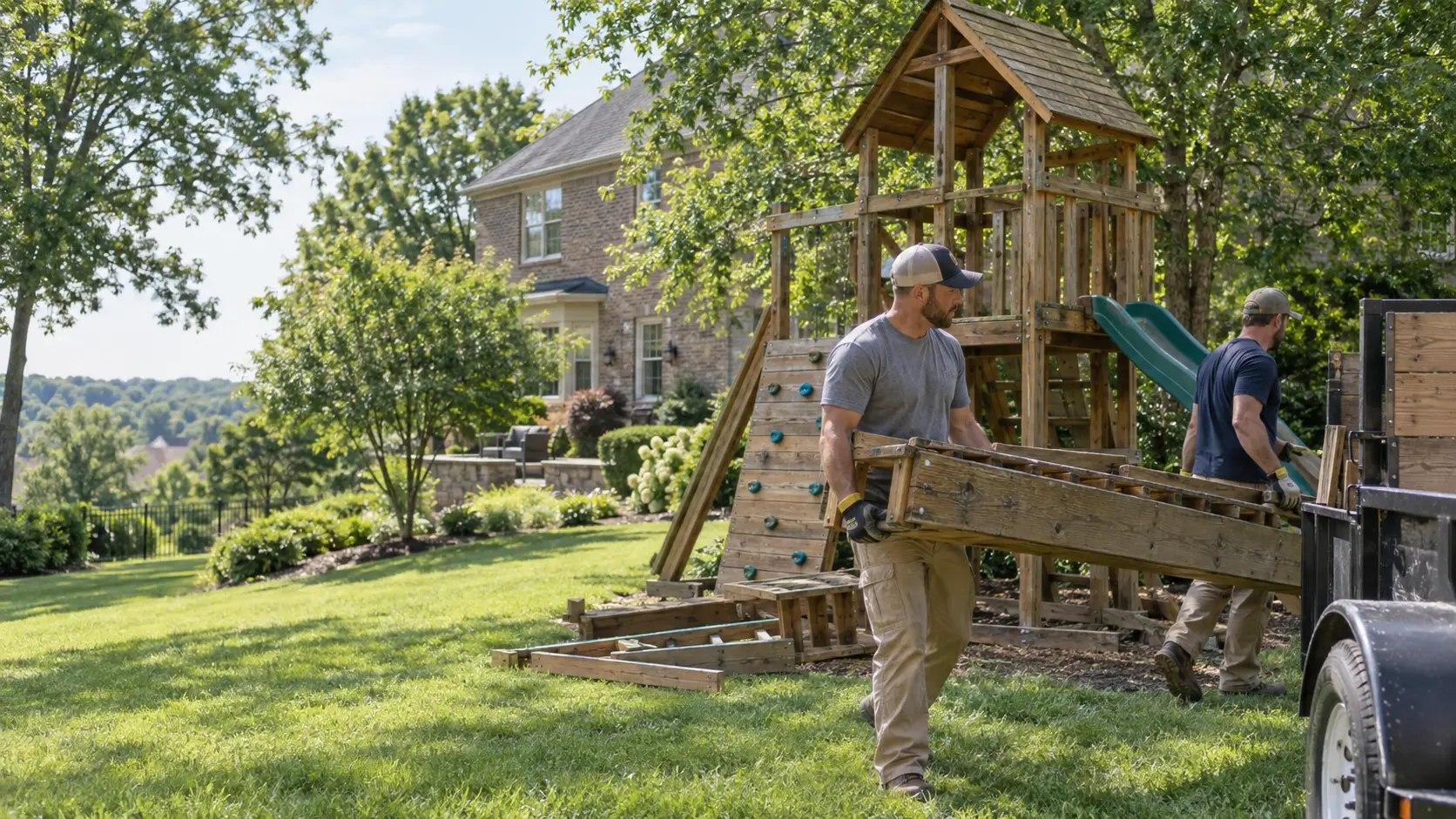
Plan the teardown, carry path, loading, and haul-off for a weathered playset, swing set, or trampoline without turning your weekend into a pile of mystery hardware.
Wood, steel, plastic, rope, concrete, and years of weathering can meet in one structure. The useful estimate starts with the details that change the work.
Overall size, anchor type, rot or storm damage, gate width, slope, stairs, carry distance, and legal parking all matter. A clear scope also separates equipment removal from landscaping, grading, utility work, or new construction.
See the full scope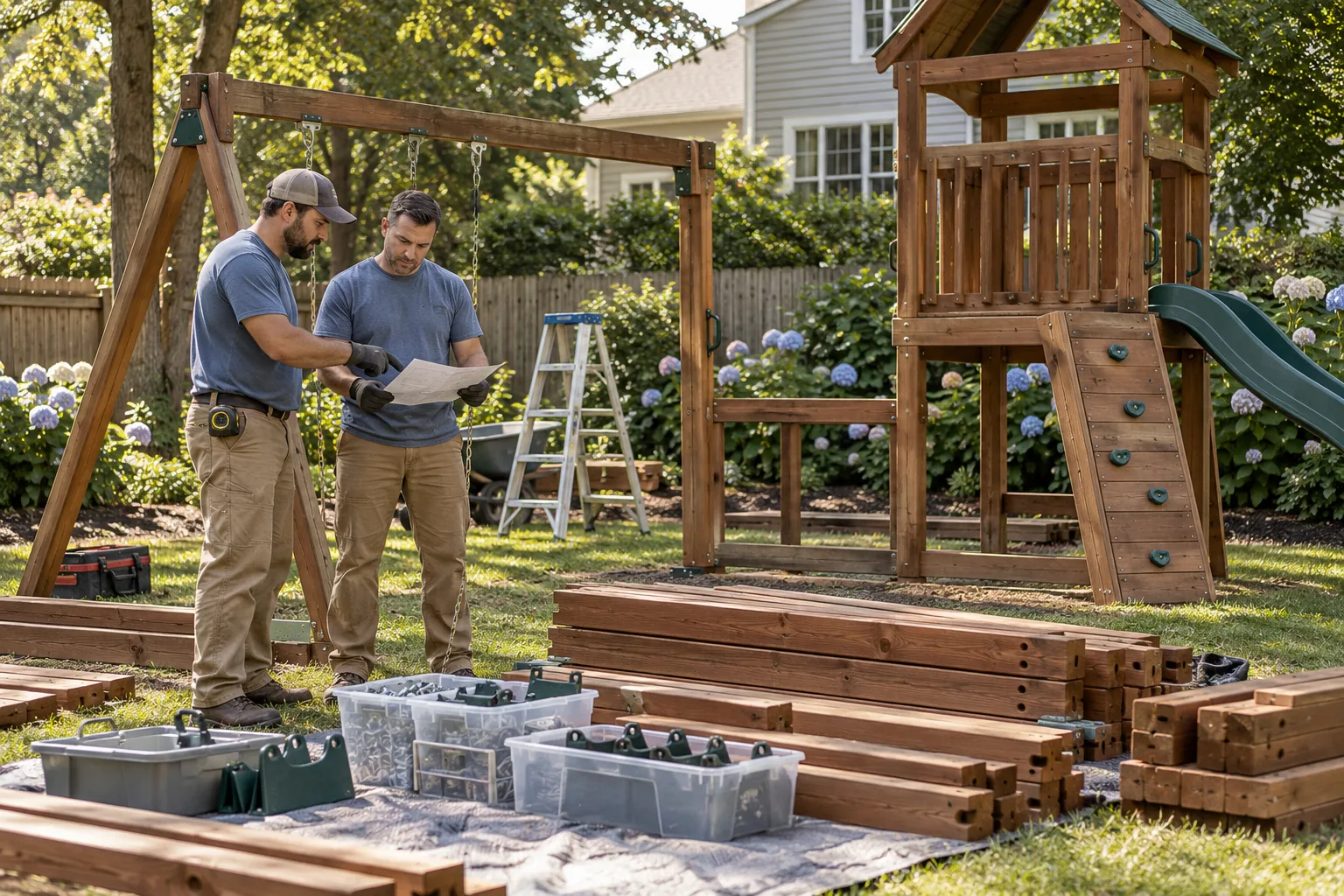
Start with the main service or open the item-specific page that matches the equipment in your yard.
Complete backyard equipment teardown, loading, and haul-off planning.
ViewTimber + hardwareMethodical removal for cedar and pressure-treated backyard play systems.
ViewSteel + fabricDisassembly and removal for worn, storm-damaged, or unused trampolines.
ViewWood or steelRemoval planning for metal frames and wooden swing-beam systems.
ViewMixed materialsScoped removal for residential slides, climbers, sandboxes, and play structures.
ViewLight demolitionA related light-demolition scope for small non-utility backyard structures.
ViewShare wide photos, anchor close-ups, measurements, and the intended loading route.
Decide whether borders, mulch, footings, loose debris, or connected pieces belong in the scope.
Unlock gates, move vehicles, flag irrigation, and keep children and pets away from the work zone.
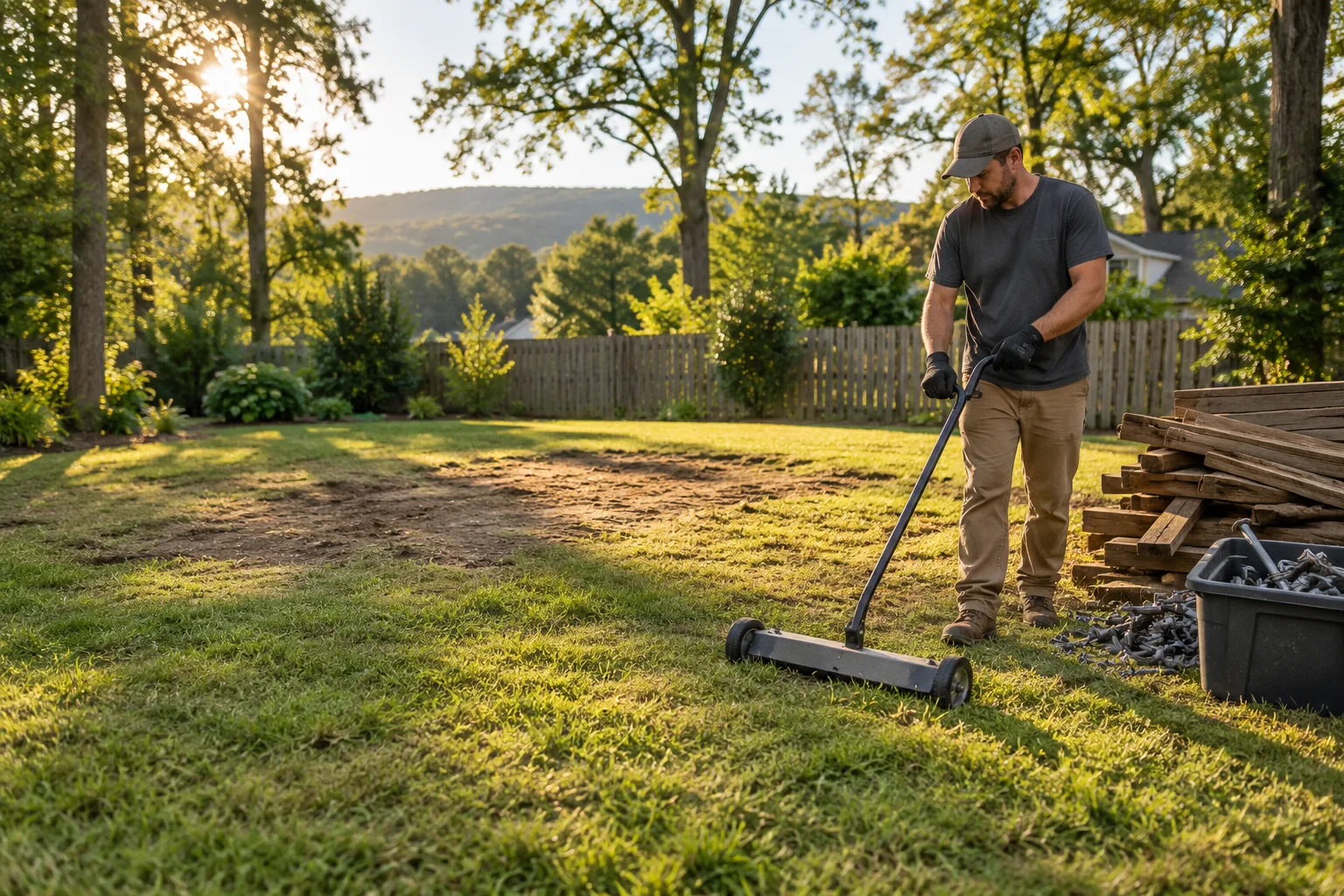
Haul-off can include the dismantled equipment and agreed debris. It does not automatically include soil repair, landscaping, utility work, stump removal, or a new installation.
A few clear photos and measurements make the first estimate conversation more useful.